


Your Commercial Jet Simulator Experience
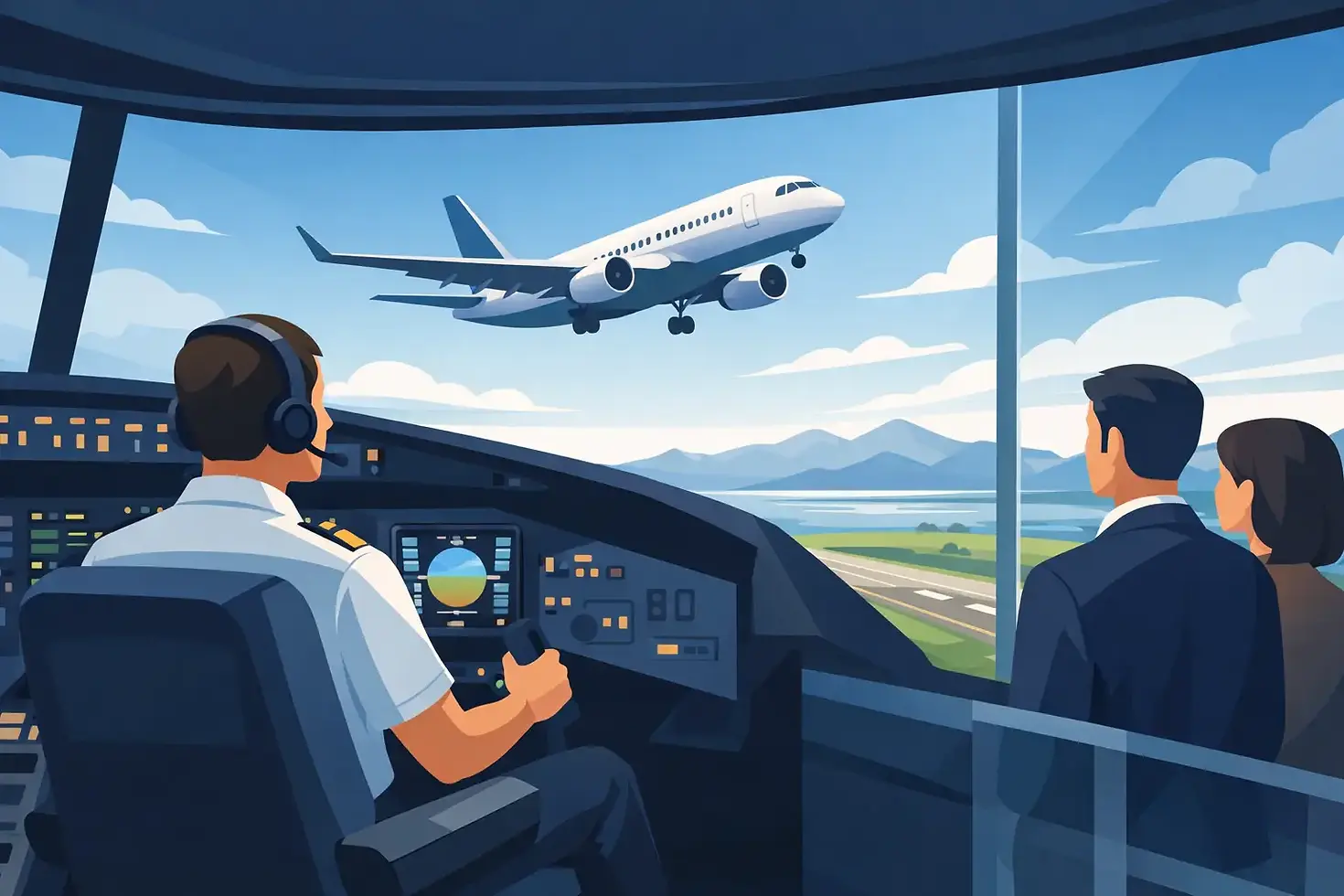
The runway is ahead, the Airbus A320 is lined up, and the cockpit has gone quiet. Your hands are on the sidestick. At this point, a commercial jet simulator experience stops being something you watch from the cabin window and becomes a decision-making exercise at the front of the aircraft.
This is not a video game with a plastic yoke and a few buttons. It is an opportunity to take command of a commercial airliner cockpit, work through real flight phases and feel how much precision sits behind every calm landing at the airport gate. Whether you are buying an unforgettable gift, planning a standout group day or refreshing your aviation knowledge, the appeal is simple: you get closer to the real thing than most people ever will.
What makes a commercial jet simulator experience different?
The word “simulator” covers a wide range of attractions. Some are designed for quick thrills, while others are built around the systems, layout and handling philosophy of a real aircraft. The difference matters when your goal is to feel like a captain rather than a passenger playing a flight-themed game.
A high-fidelity Airbus A320 simulator recreates the environment pilots know: a full-scale cockpit, Airbus-style sidesticks, overhead panel, primary flight displays and the flow of a commercial flight. Instead of simply steering an aircraft through a computer-generated sky, you are introduced to the procedures that give airline flying its rhythm. You will see how the crew prepares the aircraft, configures it for departure, manages the flight path and sets up for approach.
At Simulator Adventures in Manchester, that realism extends beyond the cockpit shell. A 6-axis motion platform responds to the aircraft’s movement, while a 220-degree HD wraparound visual system puts the runway, terrain and weather where they should be - outside the windscreen. The effect is compelling: banking, accelerating and touching down are not abstract commands on a screen. They are events you can see, hear and feel.
That does not mean a session is inaccessible to a first-timer. It means the experience has enough depth to reward curiosity. An instructor remains alongside you throughout, translating airline terminology into clear guidance and helping you take control at the right pace.
From cold cockpit to touchdown
A session can be tailored to the time available and the person in the captain’s seat, but it commonly follows the shape of a real flight. That structure is part of the excitement. A take-off feels more significant when you understand what has been configured before you advance the thrust levers.
Setting up for departure
You may begin on the stand or at the runway, depending on the session. Your instructor will introduce the cockpit controls and explain the Airbus approach to flying. The A320 is famous for its fly-by-wire architecture and sidestick controls, which can feel very different from the traditional control column many people expect.
You will work with the key flight instruments, select settings and prepare for departure. There is no expectation that you arrive knowing every switch or abbreviation. The challenge is guided, not thrown at you. Yet you still make the inputs, follow the prompts and experience the discipline required to get an airliner airborne.
Feeling the take-off roll
Take-off is usually the moment that stays with people. The runway markings begin to pass faster, the aircraft gathers speed and the instructor calls the cues. Then comes the rotation. Ease back on the sidestick and watch the horizon drop beneath the nose as the A320 climbs away.
The motion system adds a physical layer that a static cockpit cannot reproduce. It is not there just for drama. Movement helps communicate acceleration, pitch and bank, giving you a stronger sense of what the aircraft is doing. For aviation enthusiasts, it is often the first time those familiar cockpit calls and instrument indications feel connected to the aircraft’s response.
Flying the approach
Cruise is satisfying, but approach and landing are where concentration rises. You may be asked to manage speed, altitude and the descent path, then line up with the runway while the visual system delivers a convincing airport environment ahead.
A smooth landing is never guaranteed, and that is the point. Weather, crosswinds, visibility and airport choice can all change the task. A clear day into a large airport gives you time to settle in. A night approach, gusty wind or shorter runway raises the pressure and makes the result more rewarding. Your instructor can adjust the scenario to suit your confidence and ambition.
The touchdown may be beautifully composed or a little firmer than planned. Either way, you will understand why airline pilots train repeatedly for approaches and landings. There is a real skill in being precise while staying calm.
Why instructor guidance changes the experience
An authentic cockpit has a lot to offer - and a lot to learn. That is why expert instructor support is central to a quality session. The instructor does not take away the challenge; they make it possible to enjoy the right level of challenge.
For a complete beginner, guidance means you can focus on the big moments without getting lost in technical detail. You can ask why the aircraft is configured in a certain way, what the displays are telling you or why the A320 behaves differently from a light aircraft. The answers turn an exciting day into a proper insight into airline operations.
For experienced flyers, aspiring pilots and licence holders, the conversation can go further. A refresher-style session can be shaped around familiarisation, instrument scanning, SOP awareness, handling practice or specific scenarios. A simulator experience is not a substitute for approved airline training or an official check, but it can be a valuable, cost-effective environment for practising knowledge and building confidence.
The best approach depends on what you want from the session. If you are there for a milestone birthday, take the time to enjoy the view from the flight deck and celebrate the first landing. If you are preparing for more formal proficiency work, arrive with clear objectives so the session can focus on the areas that will benefit you most.
Choosing the right session for the person flying
A commercial jet cockpit makes an exceptional gift because it gives the recipient a story they can genuinely call their own. They did not just sit in an aircraft-themed attraction. They took the controls of an Airbus, departed an airport and brought the aircraft back to the runway.
For older teens and adults fascinated by aviation, realism is usually the deciding factor. They want the panels, the visuals, the motion and the language of airline flying. They may have spent years watching cockpit videos, tracking flights or wondering what happens behind the locked flight deck door. A simulator gives that curiosity somewhere to go.
Group and corporate bookings work for a different reason. Commercial aviation demands communication, composure and shared focus. A simulator session naturally creates conversation before and after each flight, whether colleagues are comparing landings or watching one person tackle a challenging approach. It is more memorable than a standard team activity because everyone has a role: captain, observer, photographer, enthusiastic commentator or next person in the seat.
When selecting a duration, be realistic about the outcome you want. A shorter flight can deliver the high of take-off and landing. More time gives room for a fuller briefing, multiple approaches, different airports and a deeper look at cockpit systems. For a serious aviation fan, extra time is rarely wasted.
Make the most of your time in the Airbus cockpit
You do not need to study an A320 manual beforehand, but a little preparation can make the experience even better. Think about the airport or conditions you would most like to fly. Would you prefer the familiar skyline of a UK airport, a dramatic mountain approach, a busy European hub or a night landing with city lights ahead?
Tell the instructor what you want from the day. Some people want maximum hands-on flying. Others are fascinated by the overhead panel, autopilot modes and flight management side of the cockpit. Both are valid, and a good session can balance the technical detail with the pure thrill of flying.
Wear something comfortable, bring your questions and do not worry about getting every input perfect. Professional flying is built on procedure, repetition and teamwork. Your job is to take command, listen to the guidance and enjoy the rare sensation of seeing an airliner respond to your control.
When the aircraft is parked and the screens go dark, you will leave with more than a photo in the captain’s seat. You will have felt the pace, responsibility and exhilaration behind commercial flight - and the next time you watch an A320 lift from the runway, you will know exactly why that moment matters.


Comments