


Full Motion Simulator Booking Guide for First Flights
The first decision is not which runway to use. It is how much time you want in the captain’s seat. This full motion simulator booking guide helps you choose a session that matches your ambition, whether you are buying an unforgettable gift, planning a group experience or preparing to refresh real-world Airbus procedures.
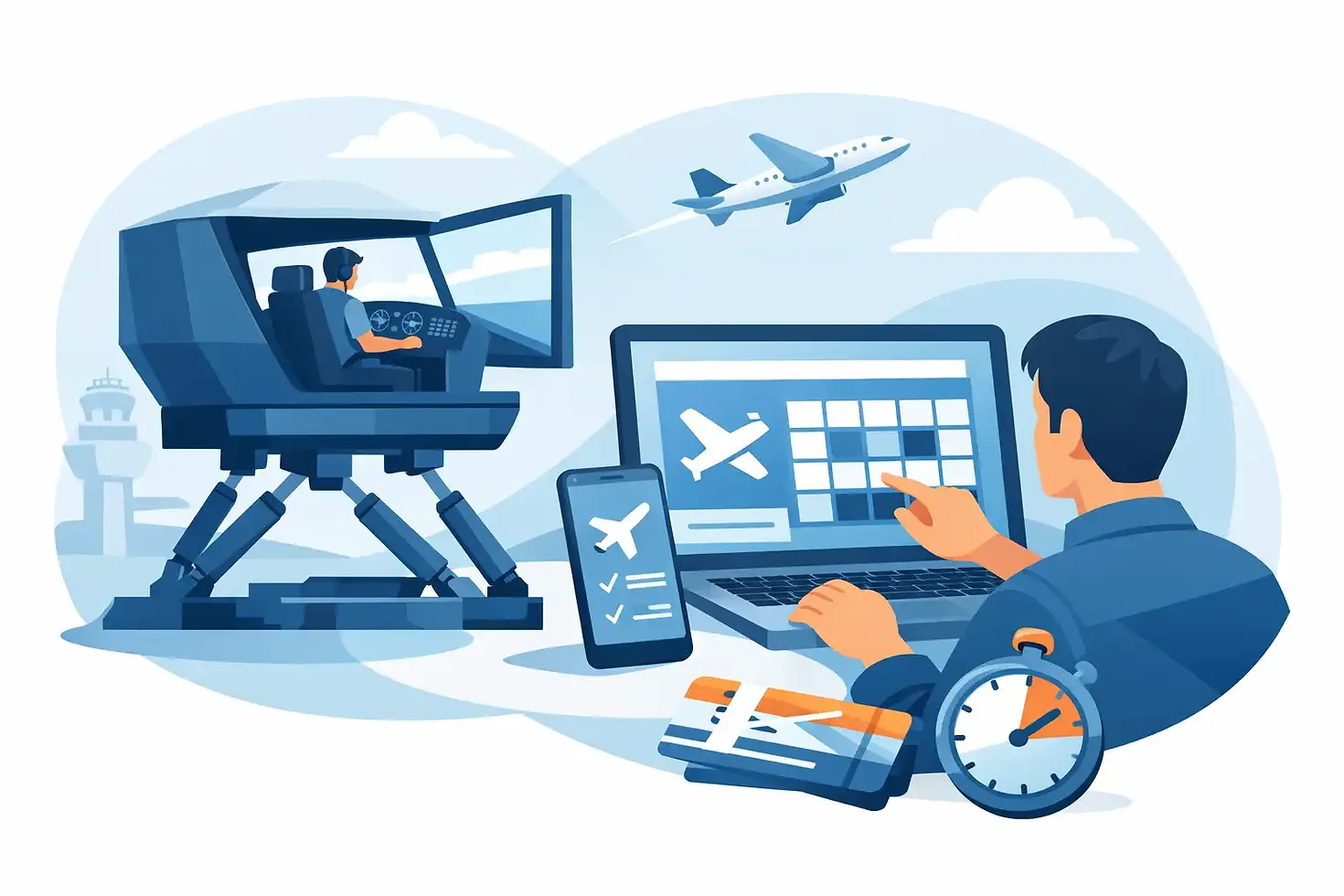
A proper airliner simulator is not a quick arcade ride. In a full replica Airbus A320 cockpit, you will work with genuine-style sidesticks, aircraft systems and instructor-led scenarios while a 6-axis motion platform recreates the feel of acceleration, banking and touchdown. The more clearly you know what you want from the day, the more you will take from every minute at the controls.
Start with the experience you want
For a first-time flyer, the goal is usually clear: take command of a commercial airliner and feel what it is like to fly from the left-hand seat. A session built around take-off, turns, approaches and landing gives you the biggest sense of achievement. You do not need previous flying experience. Your instructor will introduce the cockpit, explain the core controls and guide you through each phase of flight at a pace that feels exciting rather than overwhelming.
If you are buying for an aviation enthusiast, look beyond the headline of simply “flying an Airbus”. Ask what will make the flight personal. A favourite airport, a demanding approach, poor weather, night operations or a route linked to a memorable holiday can turn an excellent gift into a story they will repeat for years. The A320’s 220-degree HD visual system makes the outside world part of the experience, from lining up on the centreline to spotting the runway lights through low cloud.
For licensed, trainee or returning pilots, the priority changes. You may want concentrated time on normal flows, raw-data flying, instrument approaches, abnormal procedures or preparation for proficiency-related work. A simulator session can be a cost-effective place to rehearse decision-making and cockpit discipline without the pressure and cost of aircraft operating time. Be clear about your current experience and objectives when booking so the instructor can shape the session accordingly.
Choose the right session length
Session length matters more than many first-time customers expect. The aircraft does not appear on final approach the moment you sit down. There is a briefing, cockpit familiarisation, setup and a natural period of getting used to the sidestick and flight displays.
A shorter session is ideal when you want a powerful first taste of airline flying or are arranging a surprise experience. Expect a focused introduction with the highlights: taking off, handling the aircraft and attempting a landing with expert support. It is an excellent choice for someone who wants to become the captain without needing to absorb every detail of Airbus systems logic in one visit.
A longer booking gives the flight room to breathe. You can repeat approaches, try a second airport, compare a manual landing with one flown using more automation, or recover from an imperfect first attempt. That repetition is valuable. Nobody walks into a high-fidelity A320 cockpit and immediately flies every profile perfectly, and the best moments often come after the first landing, when the initial nerves have gone and confidence starts to build.
For a group or corporate booking, consider whether each person needs meaningful hands-on time. A shared experience works brilliantly when participants can rotate through flying, observing and learning from each other, but the schedule should be realistic. If everyone wants to land, allow enough time for everyone to have a genuine turn rather than rushing the cockpit changeovers.
What full motion changes
Not every simulator delivers the same kind of flight experience. A static cockpit can teach useful procedures and still be enormous fun, but motion adds another layer of physical feedback. As the aircraft accelerates, rotates, banks or touches down, the 6-axis motion platform responds beneath you. Combined with wraparound visuals, that movement changes how a turn, descent or flare feels.
It also raises the importance of comfort. Most guests love the sensation because it makes the cockpit feel alive. If you are prone to motion sickness, do not assume it will spoil the day, but mention it before the session begins. Your instructor can explain what to expect and adjust the pace where appropriate. You are there to enjoy commanding the aircraft, not to battle through discomfort.
Realism is about more than movement. Airbus flying has its own character: the sidestick, the flight control philosophy, the Electronic Centralised Aircraft Monitor displays and the relationship between pilot inputs and automation. You do not need to memorise the architecture before arrival. However, people who enjoy the technical side often get more from asking why a system behaves as it does, rather than treating the cockpit as a set of switches to press.
Book with a clear brief
The strongest bookings begin with a few simple details. Is this a first flight, a gift, a group challenge or a pilot refresher? Is there a preferred date? Does the guest have any aviation experience? Is there an airport, route or scenario that would make the session special?
Giving this context helps create a flight that feels designed around the person in the seat. A nervous first-timer may prefer a calm daytime arrival at a familiar airport. An enthusiast might relish a crosswind landing, a night approach or a route into a dramatic airport. A pilot may arrive with a specific training aim and want as little leisure framing as possible. There is no single best scenario - there is only the scenario that best suits the crew.
If you are purchasing a voucher, think about flexibility as well as the reveal. A voucher works particularly well for birthdays, milestones, retirements and Christmas because the recipient can choose a suitable date and come ready to enjoy it. It also avoids the common gift problem of handing over another object that will end up in a drawer. This is a chance to sit in an Airbus A320 cockpit and fly it.
Prepare for your day in the cockpit
You do not need a pilot’s licence, specialist clothing or a folder full of aviation notes. Wear something comfortable, arrive with time to settle in and bring your curiosity. If you have a preferred airport or a flight you want to recreate, make a note of it beforehand so you can explain it clearly.
A small amount of preparation can deepen the experience. Learn the basic stages of a flight: taxi, take-off, climb, cruise, descent, approach and landing. Understand that the sidestick controls pitch and roll, while thrust levers manage power. That is enough to make the instructor’s briefing easier to follow without stealing the joy of discovering the cockpit on the day.
Avoid setting an unrealistic standard for yourself. Commercial pilots train extensively, work in crews and use disciplined procedures. Your first landing may be firm, off-centre or need a little instructor intervention. That is not a failed experience. It is the point at which airline flying becomes real. The satisfaction comes from making corrections, seeing the runway grow in the windscreen and bringing a sophisticated aircraft safely back to the ground.
Bring the right people along
An airliner simulator session is naturally individual, but it is also great to share. Partners, friends, family members and colleagues can add to the occasion by watching the flight develop and celebrating the successful landing. For corporate teams, the cockpit creates an unusual environment for communication, calm decision-making and friendly competition.
There is a trade-off. A large audience can make the day feel more memorable, but some guests prefer to concentrate without too many voices behind them. Think about the personality of the person flying. The best booking is not always the busiest one.
Make the most of instructor guidance
Your instructor is not there merely to prevent the aircraft from leaving the runway. They are your co-pilot, coach and guide to a cockpit that has been designed around commercial aviation. Tell them what you want from the session, ask questions and be honest if you would like more help or more challenge.
First-time guests often gain the most by flying manually for key moments, particularly after take-off and on final approach. More experienced visitors may want to explore flight director use, automation management or a carefully constructed scenario. Both approaches are valid. A brilliant simulator flight is not measured by how many technical terms you use, but by how involved you feel in every decision.
Simulator Adventures combines this instructor support with a high-fidelity A320 environment in Manchester, making the step from passenger to captain feel convincingly close. The cockpit may be on the ground, but the concentration, movement and visual immersion demand your full attention.
A booking worth remembering
When you choose the right session, give it enough time and arrive with a clear idea of what excites you, a simulator booking becomes far more than a novelty. It becomes a rare chance to take responsibility for an airliner, make the calls and watch the runway appear ahead of you.
Choose the flight that gives you a reason to take the controls - then let the first push of thrust turn that reason into a memory.


Comments